




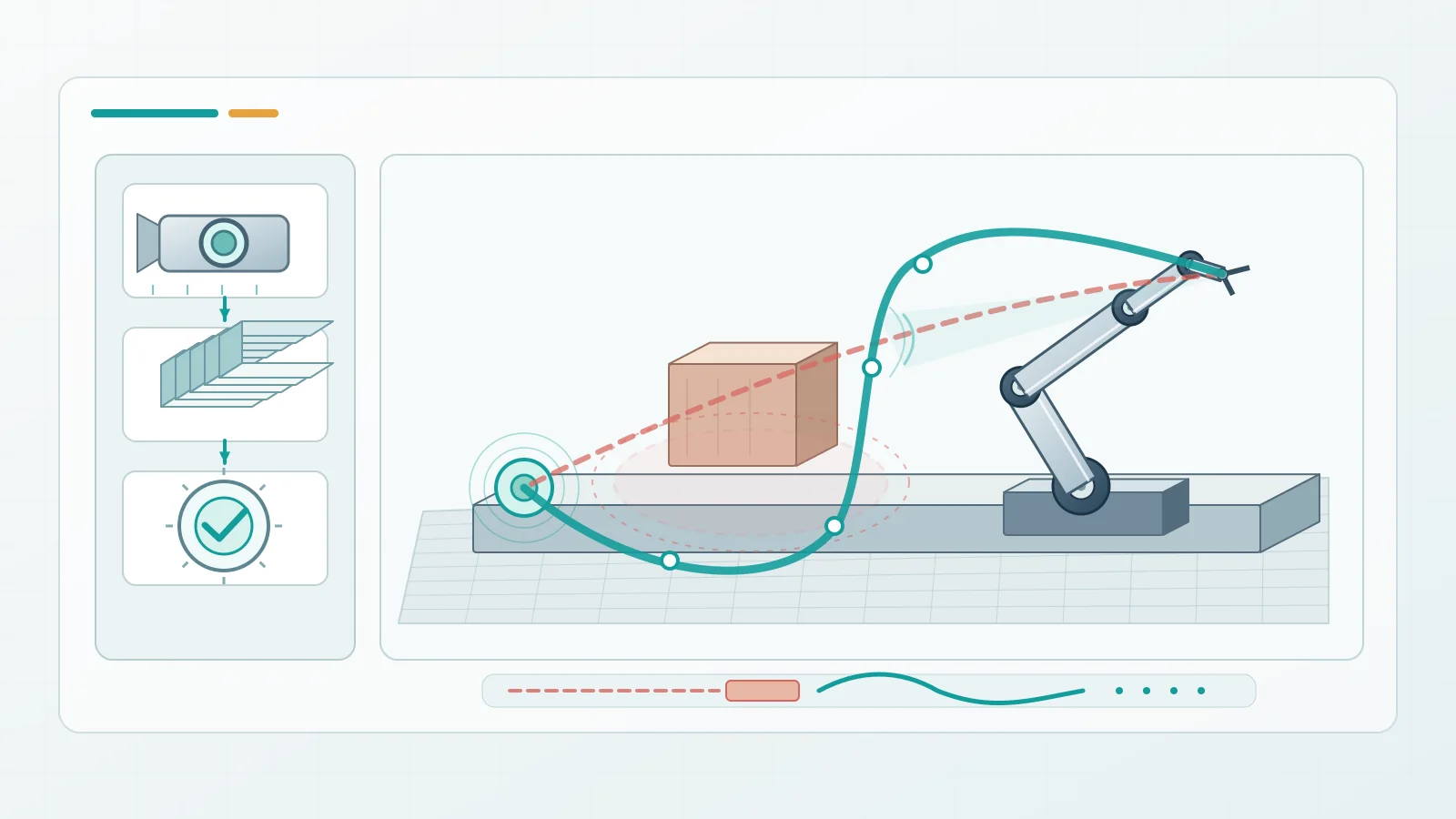
A VLA can understand a command and still drive an arm into an obstacle. VLA-Stem addresses that gap without retraining the base model. It turns predicted action chunks[2] into motion references and adds a faster local controller that adjusts execution using robot-state and obstacle observations.
Across six constrained simulation settings, the researchers report 52.8% collision-free success, versus 23.7% for their strongest safety baseline. Physical tests also show fewer collisions. The architecture is promising for existing policies, but these limited experiments are not a general safety certification or independent replication.